
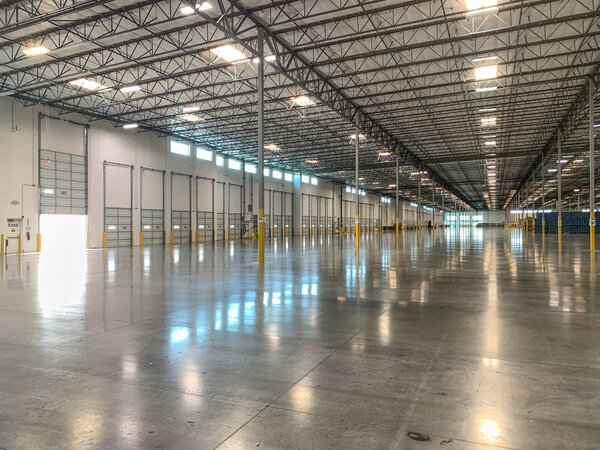
Choosing the right flooring system for your facility is more than a design decision—it’s an operational one. The floor has to handle traffic, chemicals, cleaning routines and daily wear without becoming a constant maintenance issue. With epoxy, urethane and polyaspartic systems all commonly used in industrial and commercial environments, understanding how each performs helps narrow the best option for your space.
While these coatings are often grouped together, they behave differently once installed. The right choice depends on how your facility operates, how much downtime you can afford and what conditions the floor will face long term.
Epoxy flooring
Epoxy has been a staple in industrial environments for decades, largely because of its strength and versatility. Formed by combining resin and hardener, epoxy creates a rigid, seamless surface that bonds tightly to concrete. This makes it a dependable option for warehouses, manufacturing plants and other facilities where heavy equipment, forklifts and pallet traffic are part of daily operations.
Epoxy systems can be installed in various thicknesses, from thin coatings to high-build or mortar systems designed to handle impact and abrasion. They also offer solid resistance to many chemicals and spills, which is critical in industrial settings. Another benefit is improved cleanability compared to bare concrete, helping reduce dusting and making routine maintenance more manageable.
That said, epoxy does require careful surface preparation and typically longer cure times. Depending on the system, floors may need to remain out of service for several days, which can be a challenge for operations with limited downtime windows.
Urethane flooring
Urethane coatings are often used in conjunction with epoxy systems rather than on their own. Where epoxy provides structural strength, urethane adds flexibility and enhanced resistance to certain environmental stressors. Urethane floors perform well in areas exposed to chemicals, abrasion and UV light, making them a strong option for facilities with exterior access points or natural light exposure.
One of the key advantages of urethane is its ability to flex slightly with temperature changes, reducing the risk of cracking over time. Urethane topcoats also tend to maintain their appearance longer, resisting yellowing and gloss loss caused by sunlight or aggressive cleaning routines.
For many facilities, the epoxy-urethane combination delivers the best of both worlds: a durable base layer with a protective topcoat that extends service life and improves long-term performance.
Polyaspartic flooring
Polyaspartic flooring systems have gained popularity largely because of how quickly they cure. In environments where downtime is costly, the ability to install a floor and return it to service within hours can be a major advantage. Polyaspartic coatings are part of the polyurea family and are known for fast set times, even in cooler temperatures.
Beyond speed, polyaspartic systems offer strong abrasion resistance and excellent UV stability. They’re often used in facilities that need quick turnarounds, such as maintenance areas, service bays or production spaces with tight schedules. Their wider application temperature range also allows installation during seasons when traditional coatings may struggle.
While polyaspartics typically come with a higher upfront cost, many facilities find the reduced downtime offsets the initial investment.
How to decide what works best for your facility
Rather than focusing on the coating alone, it helps to step back and evaluate how your floor will actually be used:
- Traffic and load: Heavy machinery and forklifts often favor epoxy or epoxy-based systems.
- Chemical exposure: Urethane and polyaspartic systems add extra protection in chemically demanding environments.
- Downtime tolerance: If shutting down operations for days isn’t an option, polyaspartic systems are worth considering.
- Light exposure: Areas with sunlight benefit from UV-stable urethane or polyaspartic topcoats.
- Maintenance expectations: All three improve cleanability, but urethane and polyaspartic systems often retain appearance longer.
Real-world applications
A manufacturing facility may rely on a high-build epoxy floor for impact resistance, paired with a urethane topcoat to protect against chemicals. A distribution center with tight schedules might prioritize a polyaspartic system to minimize downtime. A facility with both indoor and outdoor exposure may benefit from the UV resistance of urethane or polyaspartic coatings.
Conclusion
Choosing a flooring system isn’t just about what looks good on day one. It’s about how that floor performs under daily traffic, chemical exposure, cleaning cycles and operational pressure over time. The right combination of epoxy, urethane or polyaspartic materials can extend floor life, reduce maintenance demands and help facilities operate more efficiently with fewer disruptions.
Protective Industrial Polymers works with facility teams to evaluate real-world conditions and design flooring systems that balance performance, durability and downtime considerations. Contact us to discuss which flooring solution best fits your facility’s needs.

- Industrial Flooring Moisture Control: Challenges and Proven Solutions - February 19, 2026
- Troubleshooting Polyurethane Floor Problems: Causes and Corrective Solutions - February 18, 2026
- Concrete Floor Preparation: Best Practices for Long-Lasting Coatings - January 29, 2026
