
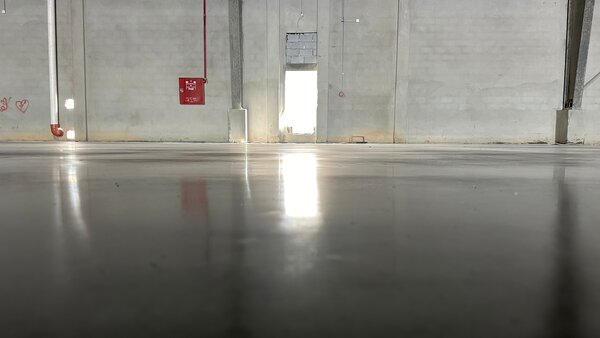
When an industrial floor coating fails, the cause is rarely the coating itself. In most cases, the problem can be traced back to the surface beneath it. Concrete floor preparation is the foundation of any successful coating system, and cutting corners early often leads to costly repairs, downtime and premature wear.
Concrete may appear solid and uniform, but it is a complex, porous material that responds to its environment. Moisture moves through it, contaminants become embedded over time and small imperfections can turn into major issues if they’re not addressed before a coating is applied. Proper concrete floor preparation ensures the coating has a stable, reliable surface to bond to and perform as intended.
Understanding the condition of the concrete
Every floor tells a different story. Age, usage, previous coatings, exposure to chemicals and maintenance practices all affect the condition of the concrete. Cracks, surface wear, oil saturation or uneven areas can compromise adhesion if they’re overlooked. A thorough evaluation helps determine the level of preparation required and prevents surprises once installation begins.
This initial assessment is especially important in industrial facilities where floors see constant traffic, heavy loads or extreme conditions that accelerate wear.
Why cleaning is critical for concrete floor preparation
Concrete must be free of contaminants for a coating system to bond properly. Dirt, dust, grease, oils and curing compounds act as barriers that interfere with adhesion. Even surfaces that look clean can hold residues that weaken the bond between concrete and coating.
Moisture can’t be ignored
Beyond surface contaminants, moisture is one of the most common causes of coating failure. Concrete naturally contains moisture, and vapor transmission can create pressure beneath a coating system. Without proper testing and mitigation, that pressure may lead to blistering, peeling or delamination over time.
Testing moisture levels before installation provides valuable insights into which primers or systems are appropriate for the environment. Temperature and humidity conditions should also be considered to support proper curing and long-term durability.
Surface profiling sets the stage for adhesion
A smooth concrete surface does not provide enough texture for coatings to anchor effectively. Surface profiling creates a controlled roughness that allows the coating to mechanically bond to the concrete. The required profile varies depending on the coating system, but consistency is always important.
Addressing repairs before coating
Cracks, joints and damaged areas should be repaired before the coating is applied. If left untreated, these imperfections can transfer movement or stress into the coating system. Over time, this may lead to visible cracking or localized failure.
Completing repairs beforehand creates a stable base and helps the coating system perform as a cohesive, long-lasting surface rather than a patchwork of problem areas.
Matching preparation to the coating system
Not all coatings place the same demands on concrete. Epoxy systems, urethane concrete and other industrial coatings each require specific preparation methods to perform properly. Aligning surface preparation with the selected coating system ensures the floor can withstand its intended use, whether that includes heavy equipment, chemical exposure or frequent washdowns.
The long-term impact of proper concrete floor preparation
Taking the time to prepare concrete correctly delivers measurable benefits. Well-prepared floors support longer coating life, lower maintenance costs and fewer disruptions to daily operations. In environments where downtime is expensive, proper concrete floor preparation is an investment that pays off over the life of the floor.
Conclusion
Every facility is different, and the right preparation and coating system depends on how your floor is used, what it’s exposed to and the condition of the concrete beneath it. If you’re planning a new coating or addressing an existing floor issue, a consultation can help clarify the best path forward.
Protective Industrial Polymers works with facility managers, engineers and contractors to evaluate conditions, recommend appropriate systems and support long-term performance. Reach out for a consultation and get expert guidance before installation begins.

- Industrial Flooring Moisture Control: Challenges and Proven Solutions - February 19, 2026
- Troubleshooting Polyurethane Floor Problems: Causes and Corrective Solutions - February 18, 2026
- Concrete Floor Preparation: Best Practices for Long-Lasting Coatings - January 29, 2026
